


On 7 July, somewhere on the high-speed line between Seoul and Busan, Andhra Pradesh's industries minister Nara Lokesh took a call from the chief executive of his state's Economic Development Board. A group of officers had just walked out of Guidance Tamil Nadu, the agency that has courted investors for Chennai for a decade. Lokesh's instruction, as later reported, was short: offer them jobs.
Four months later, three of them sat on a stage in Visakhapatnam while Chief Minister N. Chandrababu Naidu felicitated them at the CII Partnership Summit. Within a week Tamil Nadu's television channels were reporting a "mole" inside Guidance, 15 officers "sacked" for leaking investor files to Andhra, and a spy row between two states that share a border, a Korean auto cluster and an increasingly personal rivalry.
Almost none of the spy story survives contact with the record. The fight it sits on top of is real.
The exits
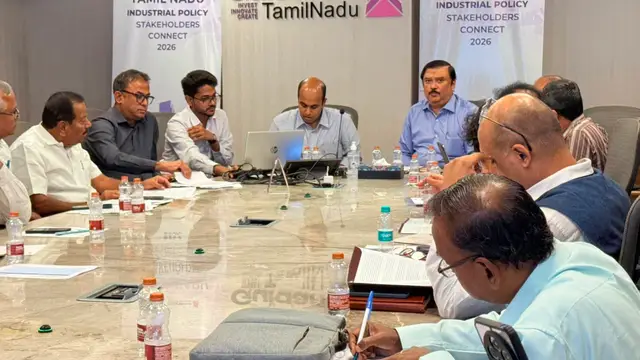
The departures began on 30 June, six weeks after the TVK government took office. Two Guidance employees were asked to resign that day. One of them has told reporters he was handed a relieving letter, asked to submit a resignation dated two days earlier, and found his email access cut about twenty minutes later. By the end of the following week at least 15 people had gone.
The two sides dispute everything about those exits except their number. Former employees say 13 of the 15 resigned and served their notice periods, and four of them say one colleague was warned of a police complaint over alleged leaks. A Tamil Nadu government official has said the staff left voluntarily, that nobody was threatened with a criminal case, and that Guidance has historically seen attrition of about 17 per cent a year.
On 31 July one of the departed wrote to Chief Minister C. Joseph Vijay and Chief Secretary M. Sai Kumar. The email, followed by a formal representation on 1 August, described a hostile atmosphere since a new managing director took charge: pay disparities, favouritism, two recent recruits given double promotions within six months, and intimidation. It asked for an independent inquiry. The writer says there was no reply.
Several of the 15 are now at Invest Karnataka and Invest Telangana. Three joined the Andhra Pradesh Economic Development Board, a move the Economic Times first reported on 11 August. One of them, Christo Laurel, marked the Visakhapatnam summit with a LinkedIn post about "four months of silence, countless battles".
The 'mole'
The leak allegation surfaced on Tamil news channels on 19 November, a week after the summit. The reports said confidential information about prospective investors had been passed to Andhra Pradesh and that the 15 had been removed for it. None specified what information, which investor, or how a leak had been detected.
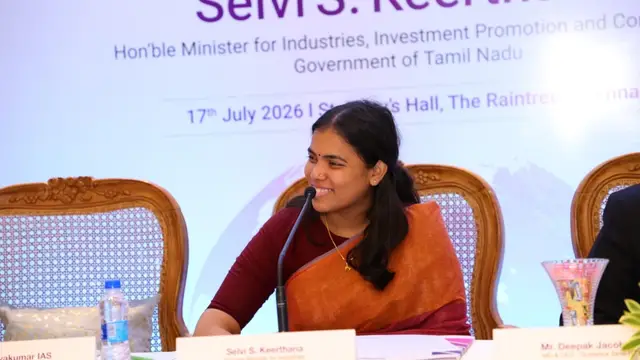
Guidance Tamil Nadu responded on X on 20 November. It said there had been "no mass resignation", that attrition was "a normal organisational phenomenon" driven by "better career opportunities, higher education, relocation, and personal or family commitments", and that the state enjoyed "healthy, constructive competition" with its neighbours. The statement did not say whether anyone had been dismissed, did not mention the word leak, and did not refer to the July complaint. It tagged the Chief Minister's office, Industries Minister S. Keerthana, managing director Deepak Jacob and executive director Pallavi Verma.
A senior state bureaucrat went further to The Federal: "The government at no point said there was a mole or a data leak." Those claims, he said, came from the media and social media. The TDP's Andhra Pradesh president, Palla Srinivasa Rao, dismissed the espionage talk and said his state attracted investors through its own policies. A Tamil Nadu official separately denied that police had been deployed to monitor Andhra officials during an investor-outreach visit to Chennai, an allegation that had circulated alongside the leak story.
TRB Rajaa, the DMK's industries minister until May and now its IT wing head, noted that the Guidance statement denied mass resignations and nothing else: sacking and resigning, he said, are "two very very different things". He described the mole story as planted "with mala-fide interests" from within the ruling party's own machinery, and said the government's "immature social-media politics" were dragging down "an institution built over decades by some of Tamil Nadu's finest minds". Several of the departed, he pointed out, had been recruited under the AIADMK before 2021, not by the DMK.
The taunt
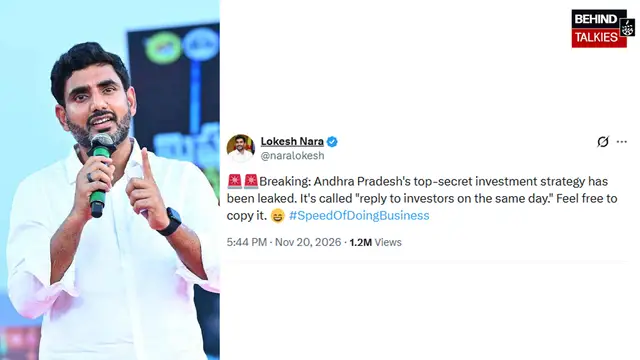
Lokesh waited until the Guidance statement was out. On Friday evening he posted: "Breaking: Andhra Pradesh's top-secret investment strategy has been leaked. It's called 'responding to investors on the same day.' Feel free to copy it!" He added the hashtag #SpeedOfDoingBusiness.
It followed his Chief Minister's line from the summit. Asked about companies shifting from Tamil Nadu, Naidu had replied: "You want masala. I want results."
The scorecard
The rivalry predates the row. Since taking office the TVK government has accused the DMK of letting 25 projects worth ₹3.3 lakh crore leave the state over five years; the DMK has pointed to each new Andhra announcement as evidence the new government is losing more. The record of the past six months is more mixed than either account.
Decision | Where it went | Value |
|---|---|---|
Hwaseung footwear plant, moved from Tamil Nadu | Kuppam, Andhra Pradesh | ₹1,720 crore |
Hwashin, Seoyon and Iwamet auto-component expansion | Anantapur, Andhra Pradesh | ₹1,614 crore, about 1,418 jobs |
Hwashin and Seoyon continued expansion | Tamil Nadu | ₹1,370 crore over five years |
HD Hyundai shipyard | Thoothukudi, Tamil Nadu | $4 billion |
TVK government MoUs since May, released 14 November | Tamil Nadu | 112 MoUs, ₹1.14 lakh crore, 83 projects at land acquisition |
CII Partnership Summit, 12–13 November | Andhra Pradesh | 303 MoUs, about ₹9.89 lakh crore |
Tamil Nadu officials attribute the Anantapur decisions to supply-chain logic: the suppliers are following Kia, whose plant is there, and whose planned second unit is worth $2 billion. Land-linked incentives were reported to have swung the Hwaseung move. Keerthana, releasing the 112-MoU list, said "transparency on commitments and accountability for delivery must go hand in hand", a pointed contrast with Andhra's summit total, which is a figure for memoranda signed rather than land allotted.
What Andhra is building
The hires were not an isolated gesture. Andhra Pradesh has proposed an Investment Protection Act with effect from 2024, real-time clearances through self-certification, and an Economic Development Board office in Chennai, where Invest UP already has one. Its summit was organised around the same message Lokesh compressed into a post: that the state answers faster than its neighbour.
Tamil Nadu's institutional reply came on 3 November, before the row broke, with the creation of the Tamil Nadu Investment Promotion Commission under the Chief Secretary to track every proposal above ₹200 crore or 5,000 jobs. Its first meeting reviewed clearances through the single-window portal and sought an additional ₹1,600 crore in subsidies. The government is also reported to be examining a one-year cooling-off period and a two-year lock-in for Guidance staff, measures that have not been enacted.
What happens next
The state's second investment conclave of the year opens in Coimbatore on 25 November, with electronics, textiles, aerospace and defence on the agenda. It will be the first time investors see Guidance in public since the row, and the first test of whether a week of headlines about moles and poaching has cost it anything measurable.
The July complaint remains unanswered. No inquiry has been announced. No evidence of a leak has been produced by anyone, and no one in government now claims there was one. What remains is the fact that both sides agree on: 15 experienced officers left Tamil Nadu's investment agency in a fortnight, and the state next door hired the ones it could reach by the following week.