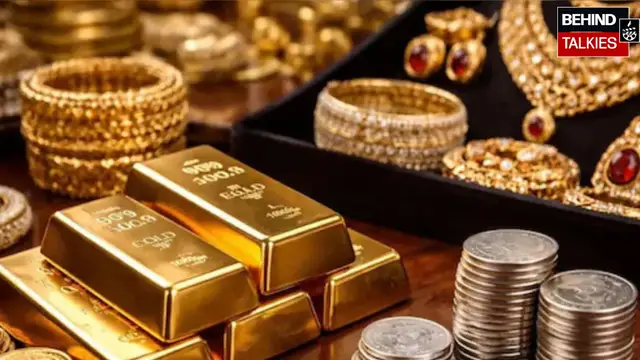

Gold in Chennai is ₹91,720 a sovereign this morning, 21 November. That is ₹42,680, or 31.8 per cent, below the ₹1,34,400 it touched on 29 January, and almost exactly where it was a year ago today, when a sovereign cost ₹91,680. Everything gold gained in 2026 has gone.
The fall has been steepest in the past fortnight. A sovereign lost ₹15,360 between 5 November and today, including ₹3,760 on Thursday alone, the biggest single-day drop of the year. Silver has fallen harder: ₹175 a gram today against ₹210 on 4 November, and 64 per cent below its January peak in dollar terms.
For a state that buys more gold per head than almost any other, with the Thai wedding season six weeks away, three questions matter: why did it fall, how far can it go, and is this the time to buy. The honest answers are below, in that order.
The week in Chennai, 22-carat
Date | Per gram | Per sovereign | Change on the day |
|---|---|---|---|
Sunday 16 November | ₹12,540 | ₹1,00,320 | −₹600 |
Monday 17 November | ₹12,470 | ₹99,760 | −₹560 |
Tuesday 18 November | ₹12,215 | ₹97,720 | −₹2,040 |
Wednesday 19 November | ₹11,980 | ₹95,840 | −₹1,880 |
Thursday 20 November | ₹11,510 | ₹92,080 | −₹3,760 |
Friday 21 November | ₹11,465 | ₹91,720 | −₹360 |
For reference: ₹99,520 a sovereign on 1 January, ₹1,34,400 at the 29 January peak, ₹91,680 on 21 November 2025.
Why it fell
The short version: gold rose on a bet that interest rates would keep falling and the world would keep getting scarier, and both bets reversed. In order of weight:
1. The Fed stopped cutting and started talking about hikes. Gold pays no interest, so it competes with bonds. When the US–Iran war pushed Brent crude to around $120 in March and April, inflation came back and the US Federal Reserve shifted from cutting rates to signalling increases. The US ten-year bond now yields just over 5 per cent, and the inflation-adjusted yield, which is what gold really trades against, is 2.86 per cent, against 1.89 per cent on the day gold peaked. Markets price a 97 per cent chance of a rate increase at the Fed's December meeting. Every tick up in that number is a reason to hold a bond instead of a bar.
2. The dollar is at a 19-month high. Gold is priced in dollars, so a stronger dollar makes it dearer everywhere else and pushes the dollar price down. The dollar index is at 103.8 after four straight weekly gains.
3. Forced selling. This explains the speed. Gold has been falling together with shares: the Nasdaq is 15 per cent off its October peak, and funds that need cash to cover losses elsewhere sell what they can, which is gold. Goldman Sachs described the market as one where "weak liquidity" is amplifying every move. Gold's correlation with world equities this year is three times its 2019–2024 average, which means it is behaving like a risk asset, not a safe haven.
4. The fear premium leaked out. The geopolitical-risk index that spiked to 327 in late March is at about 151. The Hormuz closure is still on, but markets have priced it; a crisis that is nine months old no longer moves gold. Analysts dismissed this week's Shenzhen summit as "background noise" for the metal.
5. In India, the rupee helped push prices lower. The rupee gained about 1.7 per cent against the dollar from end-October, which cut domestic prices by more than the dollar fall alone. Indian prices fell 5.3 per cent in the first twelve days of November on top of a 1.8 per cent fall in October.
What did not cause it: a collapse in Indian demand. The opposite is happening. October imports more than tripled from September to about 70 tonnes, a six-month high; the Indian market, which traded at a $66 an ounce discount to world prices in September, is now paying a $17 premium, with shortages reported in parts of the physical market. Indians are buying the dip in volume.
How low can it go
Nobody knows, and anyone who gives you a single number is guessing. What the market is watching, converted to Chennai sovereign prices at today's exchange rate and import duty, which is a rough translation, not a forecast:
Level analysts cite | Dollars per ounce | Rough Chennai equivalent, 22-carat sovereign | Who cites it |
|---|---|---|---|
Today | $3,559 | ₹91,720 | Spot, 20–21 November |
First support zone | $3,442–$3,474 | about ₹88,700–₹89,500 | Reuters technical analysis |
"Very weak" support | $3,300–$3,400 | about ₹85,000–₹87,600 | Global X |
Next technical floors | $3,260, then $3,060 | about ₹84,000, then ₹78,900 | XTB, Fibonacci levels |
Goldman Sachs end-2026 target | $4,150 | about ₹1,06,900 | Cut from $4,650 on 5 November |
UBS end-2026 target | $4,500 | about ₹1,16,000 | Cut this week; 2027 target held at $5,000 |
Citi, next three months | $4,500 | about ₹1,16,000 | 5 November |
Read that table carefully, because it says two things at once. The technical floors are below today's price, at ₹85,000 to ₹89,000, with a worst case near ₹79,000 if the Fed hikes more than once and the dollar keeps rising. But every major bank's year-end target is above today's price, by 15 to 25 per cent, even after they cut those targets this month. Goldman's $4,150 was almost exactly the spot price on 5 November; two weeks later the metal is 14 per cent below it.
The last time gold fell this fast, in March 2020, it dropped 12.45 per cent in eight sessions, bottomed ten days later, and was above its old peak within a month. But that recovery needed the Fed to cut rates to zero. This time the Fed is going the other way, and with oil still elevated it cannot easily turn. The analysts' base case, in XTB's phrase, is that prices stabilise on physical buying from India and China before any sharp recovery, not that they bounce next week.
What it means in Tamil Nadu
If you are buying for a wedding: a sovereign that cost ₹1,00,320 last Sunday costs ₹91,720 today. On a 40-sovereign wedding purchase that is ₹3.4 lakh saved in five days. Jewellers' making charges are a percentage of the gold value, so they fall too. The World Gold Council notes that South Indian wedding demand held up through the high-price months; at these prices footfall is rising and retailers are restocking.
If you bought in January: you are down a third and there is no way to say it kindly. The one consolation is that jewellery bought for use is not an investment that was meant to be sold, and gold has never gone to zero. Do not sell at a loss to "switch into something else" unless you need the money.
If you have old gold: exchange rates at jewellers track the day's price, so the old gold you bring in is worth less too. The exchange is still the cheapest way to buy, because you pay making charges only on the difference.
Buy hallmarked, and buy 22 or 24 carat. The council's own survey found 77 per cent of Indian buyers would trade down on purity to afford a piece. Lower carat means lower resale value; the saving is small and permanent.
When to buy
Three rules that hold whether gold goes to ₹85,000 or ₹1,15,000.
Do not try to catch the bottom. The people who sold at ₹1,34,400 in January were lucky, not clever, and the people waiting for ₹80,000 may wait forever. A falling market with India buying at a premium is not a market with an obvious floor.
Buy in parts. If you need 40 sovereigns by Thai, buy 10 now, 10 in two weeks, 10 after the Fed's December decision and 10 in January. If prices fall further you average down; if they bounce you have most of what you need at today's price. Most large jewellers run advance-booking and monthly schemes that lock the day's rate; use them.
Match the form to the purpose. For wearing, jewellery. For holding, coins or bars carry lower making charges, and gold exchange-traded funds carry none at all; Indian gold ETFs have seen inflows for five straight months and now hold 126 tonnes. Sovereign Gold Bonds are no longer issued, but existing series trade on the exchanges. Physical gold held for more than two years is taxed at 12.5 per cent on the gain; check the rules for your situation.
Who should wait: anyone buying purely to sell within months. With a 97 per cent-priced rate hike three weeks away and the dollar still rising, the next move could be down before it is up, and short-term gold trading at these volatility levels is gambling.
Who should not wait: anyone with a fixed need and a fixed date. Today's price is a year-ago price. If you were going to buy in January anyway, buying a part of it this week is a defensible decision whatever happens next.
FAQ
What is the gold price in Chennai today?
On 21 November 2026, 22-carat gold is ₹11,465 a gram and ₹91,720 a sovereign, down ₹360 from Thursday. Silver is ₹175 a gram.
Why is gold falling so fast?
Expected US interest-rate increases, a dollar at a 19-month high, forced selling by funds covering losses in shares, and a fading war premium. In India, a stronger rupee added to the fall.
How much has gold fallen from its peak?
₹42,680 a sovereign, or 31.8 per cent, from ₹1,34,400 on 29 January 2026. In dollars, gold is down about 34 per cent from its $5,400 record on 28 January.
Will gold fall below ₹90,000 a sovereign?
Technical analysts put the next support at $3,442 to $3,474 an ounce, roughly ₹88,700 to ₹89,500 in Chennai, with weaker floors near ₹85,000 and ₹79,000. Major banks' year-end targets are above ₹1,05,000. Neither is a prediction.
Is this a good time to buy gold?
For a fixed need such as a wedding, buying in instalments from today's price is reasonable; it is a year-ago price. For short-term trading, the risk of a further fall after the Fed's December meeting is high.
What is the difference between buying jewellery, coins and ETFs now?
Jewellery carries making charges and is for wearing. Coins and bars carry lower charges. Gold ETFs carry none and track the price exactly, but you cannot wear them.
Prices are from the Chennai bullion market as reported by DT Next and change through the day. This article is information, not investment advice.